Paddlesurf History before Year 2000
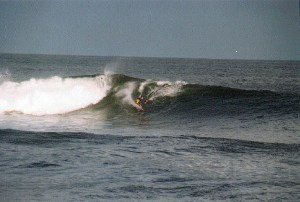
Kayak Surfing Easkey Before Year 2000
This is an attempt at producing an belated information manual which would serve as a reference both to casual and to competitive surfers in a discipline of canoe sport which has become increasingly popular in recent years. All the information would be related to before Year 2000 but a lot will still relevant. Paddle refers to both kayak and ski.
No attempt has been made in the following pages to teach, or explain fully how to teach, surfing techniques although reference is, of course, made to such techniques at various stages, particularly in the competition section of the manual. We feel that it is more appropriate that such techniques should be demonstrated and taught to aspiring surfers on the water, rather than learnt from a publication of this nature.
Because of the rapidly developing nature of paddle surfing and the craft used in the sport, it is inevitable that some of the information in this manual will be out of date before too long. While the contents are up to date at present, it is advisable, particularly in the area of competition rules and procedures, to confirm for yourself the up to date position from time to time.
In conclusion, I would ask anybody taking to paddle surfing to treat the sea with caution and respect. By their very nature, surfing beaches are dangerous and will be signposted as so by local authorities. It is essential therefore, to avoid injury and inconvenience to others that the introductory steps in paddle surfing should be taken under guidance of an experienced surfer.
HISTORY OF PADDLE SURFING
INTRODUCTION
Surfing is exhilarating to participate in and a spectacular sport to watch. The sheer enjoyment of feeling the force of the surging sea and learning to harness its power is a feeling which is difficult to surpass. To feel your boat being lifted by a large green swell, to experience the wave steepens underneath as you gradually pick up speed and take control, carving out turns as you cut across the steep face of the wave – pure magic.
The adrenaline rush of planing down the face of a wave is enough for some. Others want to be screaming down the largest wave possible, performing the most radical manoeuvres on the most powerful section of that wave, seeking to out perform their friends. This is the basis of paddle surfing competitions.
Ireland, an island nation located on the Western shores of the European continent, is a surfers paradise. Intense weather systems generated in the warm waters of the Caribbean track north-west across the Atlantic Ocean toward Ireland. The deep ocean swells from these systems result in some of the finest surf breaks in Europe. The unpolluted beaches are uncrowded, especially on the Western seaboard. The best surf season is the late winter/early spring, when water temperatures are a little low, and, true, it rains a lot, but the waves are big, clean and good.
Ireland is acknowledged to have some of the best and most under utilised surf in Europe. Ireland has been represented at every World Paddle Surfing competition since 1991.
Paddle Surfing in Ireland is governed by the Surf Committee of the Irish Canoe Union. (Canoe Ireland)
COMPETITION SURFING
Surfing on a competitive basis, where the paddler not only pits himself against the waves, but also against other competitors, has been going from strength to strength, in recent years. The disadvantage of traveling long distances to competitions, appears to be more than compensated for by the social activities and sense of “communal living” associated with the competition weekends. Competitions and coaching weekends are listed in the current calendar of Events.
As in Board Surfing, Paddle Surfing competitions are based on a knock-out structure. Each round of the knock out consists of a number of heats. Typically four competitors take to the water in each heat for approximately twenty minutes. The number of competitors and the duration may change from competition to competition depending on factors such as the number of entries, time available, and prevailing conditions. During a heat each competitor is marked for the first ten waves ridden. The scores are based on wave selection, manoeuvres, style, judgement, and skill. The competitor’s three best wave scores are totaled to give a final placing and those with the two highest scores go forward.
While it has always been a popular aspect on canoeing, Paddle surfing only came to prominence as a competitive discipline in Ireland with the organisation of the first Irish Open Surf championships in 1997 in Clare.
Over the years specialisation has occurred resulting in two different types of craft being used in separate classes. These are the Kayak class and the Open class which initially catered for the surf kayak but is not dominated by the Surf Ski.
THE ORIGINS OF PADDLE SURFING
Believe it or not modern day surfing began as an occupational hazard for the seafaring inhabitants of the Polynesian Islands in the South Pacific. With few natural harbours, miles and miles of sandy beaches and surf rolling in almost all year round, they soon developed the art of controlling a boat in heavy surf. These early surfers also paddled canoes which they used with or without outriggers. The first record of surfing for fun appears in the log of Captain Cook during his epic voyage of discovery to Hawaii in the late 1700’s.
It was only after the First World War that surfing as a leisure activity really took off with the transition from canoes to surf boards in the warm climates of Hawaii, California and Australia. It was following the development of the wet suit in the 1960’s that surfing became a practical proposition here in Ireland where we have cooler conditions. Canoeists were quick to realise the potential of our western seaboard for paddle surfing and has been developing slowly but surely since.
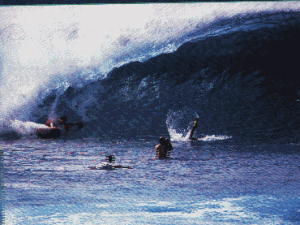
Wave Sking in Easkey before Year 2000
IRISH PADDLE SURFING HISTORY
The Early Years
Kayak surfing became popular in Ireland in the late sixties and early seventies as a recreational sport but it was not until 1979 that the first surfing competition was ever held. It took place over the October weekend in Doughmore in Co. Clare. It was organised by Lawrence Canoes which consisted of Ernie Lawrence and Tony Maher. It was a kayak only event with over 100 entries mainly from Dublin. Backward surfing scored double and loops were the order of the day even at the start of a run as that was what got the hoots and consequently top marks.
It was a similar story the following year in 1980 except that there was also a surf shoe class for the first time. This was the second ever surf competition to take place in Ireland and was set to become an annual event. As a bonus UK paddlers were invited over to participate by McNulty (Marine Sales) whose principal person Aidan Kelly went on to form O’Dare (Wetsuits). The event was again organised by Lawrence Canoes. One of those UK paddlers was an experienced English paddler called Derek Rosenberg who was to become British Champion for many years. The surf was huge with most if not all of the Irish paddlers not able to get outside the break line. It was an experience to watch the British as they cleaned up in both kayak and ski. Derek Rosenberg won the Kayak and Shoe class with Weighmouth second in both.
Shane Kelly top Irish Slalom paddler came third surfing the reforms in good style. Andy Knight another UK surfer came third in Shoe who in later years went on to form Raider Skis in England. Interestingly enough they had brought over some funny looking surf craft which we now know to be skis which up to then had never been seen or heard of in Ireland. A team event for synchronised surfing was tried out but was deemed to be a non event. The idea being that three paddlers get on and surf the wave together, even turn on the wave or loop together.
Home International Paddle Surf Championships Cornwall 1981 (By Alex Doyle)
This first Home International took place in Sat/Sun 4th 5th April 1981 in Newquay, Cornwall, England.
There were there separate classes for Kayak, Surf shoe and Ski. An Irish team took part in both kayak and surf shoe classes. It also had a ski class but there were no skis in Ireland at that time. The event was contested by teams of six paddlers in Slalom kayak, surf kayak and ski. Paddlers gained points depending on finishing position in heat and contributed to the overall score. No individual prizes were awarded. The minimum kayak length was 390 Cms. It was 10 Cms short of 400Cms to allow for cutting off ends of a slalom kayak to meet the “pointed end” specification. The format was a team event rather than an individual event and has always remained the same. This was responsible for the tremendous spirit and friendship that has always been present at these events.
Permission was given by the local council to use either Fistral, Great Western or Towan beaches depending on conditions. The competing teams and order of finishing was England, Wales, Scotland, Ireland and Jersey. England took the honours at the first Paddle Surf Home Internationals.
The Irish team trials took place over Paddy’s weekend in Easkey in 1981. These were organised by Ernie Lawrence and Tony Maher to name but a few. The surf committee was not formed at that stage.
The trials took place on Easkey Left in large surf which made team selection a bit easier. Those that survived !. Most people stayed in the Hotel in Easkey and there was a great sense of team spirit.
Larry Ward was nominated as team manager. And the following team was selected to travel to Cornwall.
Irish Home International Paddle Surf Team 1991
Alex Doyle, Vincent Wall, Eugene Kierans, Ian Gillespie, Larry Ward
Dave Smith, Eric (John) Chacksfield, Dave Polden, Joe Hurley, Brendan Dalton
Day 1
There was 10 ft surf dumping on the beach. The event took place in the middle of Fistral beach where it was an achievement to get outside the break let alone surf it. This was the biggest surf that any Irish surfer had ever seen let alone paddled in. Ireland held there own on day 1. Vague memories of that day include myself winning my heat. I just waited and waited and waited for a break to appear in the surf where I had previously watched. I stuck to my guns and eventually came after about 5 minutes. The others in my heat gave up waiting and went up the beach towards to rocks a bit and that was a fatal mistake. Believe it or not I was the first to get outside in time to take at least 3 waves while the rest were struggling. The scoring was out of 5 waves. Once outside it was easy to hold out and in fact it was quite calm. But inside it was monstrous. I deliberately took 2 short waves and slipped off the back over the top to get back outside and not get caught. Then I got adventurous and took a monster into shore and banked on getting out again. I can’t remember much after that but for the sake of this article I will say that I got back out and surfed myself silly. When I came in from my heat all I could see was carnage on the beach.
I am not quite sure if it was my heat but I saw an English paddler being carried exhausted from the surf by 2 other paddlers using a fireman’s lift. He had the look of death on his face. The fact that I remember reminds me of the effect it had on me at the time. It scared the life out of me realising what could happen and how fortunate he was and that I was to survive my heat. He actually made a full recovery almost immediately and was fighting fit the next day.
Another memory is of Eric Chacksfield swimming in the surf (He was my hero at the time who taught me all that I knew). He took an awful swim and was drifting down towards the cliffs. It was looking like he was going to come ashore and be bashed against the cliffs but fortunately he actually came ashore on the beach just yards from where the cliffs started. From recollection a RAF helicopter from a base just up the coast had to be stood down when he hit the beach rather than the cliffs. Fair dues to the organisers that they had actually made the call and I recall that the helicopters rotors were actually turning !.
I remember Dave Polden doing 360’s in a shoe on the face of a wave without a fin and that was in 1981.
That was all on day 1 and what a day. Some one else said to me that he would surf anything when he got back home after this experience.
Day 2 say the beach return to more normal surf. A good clean right hander 4 to 5 foot off the rocks on the right hand side as you look out provided the venue. It was like a reverse Easkey style wave where tactics, positioning and local knowledge paid off best. I didn’t win that day but I remember that I had a good surf.
Dave Smith from Waterford bought a second hand big Palm ski and took it back to Waterford with him. That would have been the first ski ever owned by an Irishman little did he realise what he had started.
One of the skis at the competition was a Zappa with a “tree trunk” in the middle of the ski instead of a seat belt. This allowed paddlers knee support and grip like a kayak. But what would happen if you hit a rock?. By the way it was possible to remove it and use a seat belt in the normal way.
I had seen skis paddled by a group of paddlers at the previous Irish Open in Oct 1980. I certainly had not previously paddled one or anyone else from Ireland.
Newquay
Newquay, Cornwall is regarded as the birth place of English surfing and Watergate bay claims the first ever board ride in England. During the summer months Newquay is very crowded. The main advantage of the Newquay area is that there are several beaches in close proximity facing in different directions. If there is any surf then at least one Newquay beach is working.
Fistral beach produces some of the best surf in the area. Fistral tends to produce fast lefts on the left as you look out with slower rights off the rocks on the right of the beach. There is a nice peak in the middle of the beach at mid tide. But low tide produces a dumping shoreline. Facing west Fistral can be blown out easily from the prevailing Westerly winds. Towan beach has shelter from Westerly winds and works best at mid tide. At high tide there is a lot of reflection from rocks and islands. Great Western beach is less sheltered than Towan and tends to produce bigger waves. Watergate beach provides similar surf to Fistral and provides a variety of surf at different times.
SURF COMMITTEE formed officially in October 1981
The Surf Committee was formed in October 1981 for the 1982 season. John Chacksfield (Eric) a Yorkshire man residing and paddling in Galway was it’s first Chairman. It soon got to work organising a Calendar of Events to include a ranking system and a continuation of the Irish Open Surf Championships previously started. They also set up rules and guidelines for competition and for casual surfing. One of the first things to be abolished was backward and synchronised surfing as they were deemed to be dangerous. Initially the “drop in” rule adopted was that “the first person in both kayak or ski that was surfing (planing) had right of way”. This applied to kayak especially but also in surf shoe and ski (who now competed in the same class. Surfing in Ireland was firmly established.
HOME INTERNATIONAL in Ireland 1983 for the first time
Ireland hosted its first Home International in 1983 in Easkey in 2 ft (small) surf. The O’Dare perpetual trophy in existence for the first time was awarded to England who won the Home International. This trophy is still in existence today. Ireland was to win it twice since then, first in Thurso in 1987 and again in Easkey in 1992.
A pre-event hosted by WWKC was held in perfect 12 ft the week before. Most visiting competitors participated in this competition also that saw Easkey at its best. Penzance, England won the best club trophy which returned to WWKC who won it the following year. The current judging system with three judges as is today was in place previous to this event but a repechage system was put in place for the first time. This allowed paddlers another opportunity to get to the knockout stages. This combined with the fact that not all of the events on the calendar had to be attended as only your best events were counted helped to take the bad luck syndrome out of surfing. You could afford to have bad events or not to get to some which ever you choose. Now you could afford to have a bad heat or a heat in which the judges were not kind to you. This insured that only the better surfers came through the ranking system. It was possible to win an individual heat or event with good fortune but it was even harder to become a ranking champion.
The Home International itself was a bit a non event due to lack of surf on both days. But it went ahead regardless in 2ft maximum calm surf on both days. Most of it was run off on Easkey left which is the most famous wave in Ireland. The competition shifted for the skis on the second day to a beach break at St. Farnan’s. Ireland finished second to England with Jersey , Wales and Scotland trailing. An RTE film crew turned up looking for some action but they were very disappointed with what they found. They should have been there the previous week!
Irish Open Surf Championships 1983
Paddler magazine 1993
“Once again the Irish Open lived up to it’s reputation as a big crowd puller in drawing the largest entry of the competition season. There was an entry of 28 in the Men’s Open , 20 in the Men’s Slalom and 12 in the Women’s Open. The Surf committee’s AGM which was held in Kilkee on the Saturday night was also well supported with an attendance of 57 from 17 canoe clubs. Ranking Champions Eric Chacksfield and Margaret Duffy were elected Chairman and Secretary respectively. Other committee members elected were Joe Hurley and Ronnie Sheehan of W.W.K.C., Michael Morgan of Ulster Polytech and Jim Corbett of Cork Kayak Club.
Among the items to emerge from the AGM discussions was a change in the ‘dropping In’ rule which means that the surfer nearest the shoulder of the wave has right of way rather than the surfer who was first up on the wave as the rule specified formerly”
Irish Open Results 1983
Men’s Open Men’s Slalom Women’s Open
1 E. Chacksfield Vince wall Margaret Moore
2 Dave Smith Brendan Dalton Mary Harrington
3 Joe Hurley Peter McCormick Carmel Vekins
4 Michael Morgan Alex Doyle Mary Rose Burke
FIRST INTERPROVINCIAL CHAMPIONSHIPS in 1984
The first Interprovincial Championships were held in Easkey in 1984 and was won by Leinster. The idea behind the Interprovincials was to mimic the Home Internationals but use the four provinces to generate the competition. These proved to be very popular down the years as Surf was the only discipline to have such a team event that had the four Provinces competing. It brought out the tribal instincts in people and helped to promote good healthy competition. The rules of eligibility to paddle for a province were loose and caused much controversy as passports were never intended. This continues to the present day. The team format was 4 kayak, 4 Ski, 2 Ladies and 2 Juniors. The original team managers were John Moore (Leinster), Eric Chacksfield (Connaught), Brian Pundyke (Ulster) and Mark Keller (Munster).
Leinster took the title of the first Interprovincial Championships.
BUOYANCY AIDS
The requirement to wear a buoyancy aid (provided you wore a leash) in surf ski competitions was abolished for 1985. This was keeping up with International trends at the time as it was recognised that a ski itself constituted buoyancy and provided it was attached with a proper ankle leash it would act as a buoyancy aid (not a life jacket). It was felt that it would provide freedom of movement and make it easier to re-mount ski in the surf. Most ski paddlers wore a wet suit which also had inherent buoyancy.
Surf AGM Kilkee 27 Oct 1984 noted the following
Following a great deal of discussion, a Proposal by Tony O’Callaghan and an amendment by Brendan Dalton, was passed unanimously for introduction at the next competition.
“Each Slalom competitor or Surf Shoe canoe competitor must wear a crash helmet and a buoyancy aid which complies ICF regulations.
Each Ski competitor must wear a crash helmet and either, a buoyancy aid or a fixed leash or both.
This will apply to Division One competitors only.”
“DROP IN”
Previous to 1994 the “Drop in” rule was that the person first surfing the wave had right of way and the in the event of simultaneous take off the person nearest the shoulder had right of way.
For 1994 it was modified for ski so that the surfer nearest the shoulder of the wave has right of way.
For 1996 (1986?) the “drop in” rule for competition was amended to state that
“The first person nearest the shoulder had priority”.
This applied to both kayak and ski. It also to be applied to recreational paddle surfing.
It was felt at the time that this was more in line with International trends and good surfing practice to account for both skis and boards.
This deviated from UK rules in that they still use to this very day for kayak the rule “first person planing” but apply the former to recreational paddle surfing.
Home Internationals Jersey 1995
These were organised by John McThelland of Jersey Canoe Club. The format for the competition was 6 Ski, 6 Slalom, 2 Ladies and 2 Juniors. A van driven by Vincent Kavanagh brought craft and equipment to Jersey by land and sea. The team travelled by air. Camper vans are not permitted on the island normally.
Reported comments on the event were:
“Wave conditions were very poor and small and not to suited to out big wave paddlers. We achieved fourth place behind Wales, England and Jersey in that order and only beat Scotland. We must condition ourselves to small wave surfing in the future as they do in other countries.”
The Irish team included
Men’s Open Joe, Hurley, Brendan Dalton, Vincent Wall, Vincent Kavanagh,
Michael Morgan, Ronnie Sheehan, Colm Slevin, John Moore.
Men’s Slalom Kevin O’Sullivan, Eric Chacksfield, Eamon Stack, Frank McQuillan, Tony O’Callaghan, Michael Burke
Women’s Open Margaret Moore, Mary Harrington, Ursula McPherson
Juniors John McKenna, Lawrence Kennedy
Home Internationals Cornwall England 1986
Reported comments on the event best describe it
“Just to inform you on the well noticed success of our paddle surf team in Cornwall this year. We have decided to circulate this short report to those who are on the committee, with many ideas on our strategy for Thurso 1987, also included.
Firstly we have won the title outright with John McKenna winning both his heats and Dave Coen winning one of his. For this we get the “Gul Perpetual Trophy”.
Secondly we came first along with the British Ladies in the Women’s with Margaret Moore firmly rated as British Isles Open Women’s Champ in many peoples eyes after poll positions both days.
In Kayak we came third but we gained three out of a possible eight wins plus a second placing too.
Sadly our open team only managed fourth with two second placings and one win 1985 manager. This was due we feel to the gap in fitness and standard which we must close for 1987.
Overall we came third, very close behind Wales with England tops Jersey fourth and Scotland fifth.
On day two about halfway through the day when team ego went for a “Mega hop” after five successive results of either first or second We leapt into joint second place for a while. “
Home International & European Championships Thurso Scotland 1997
Irish Panel consisted of
Slalom Frank McQuillan (Manager and Coach), Paddy Tuohy, Eric Chacksfield, Kevin Cashel, Eamon Stack, Billy Lynch, Seamus Walshe, Kieran Tuohy,
Ski Vincent Wall, Colm Slevin, Mike Burke, Kevin O’Sullivan, James Hanrahan, John Moore, David Coen, Paul Butcher.
Women’s Ski Margaret Duffy, Martina Davern, Ursula McPherson
Junior Ski Neal Kelly, Billy Keane,
Canoeist magazine December 1997
“Irish Shine in Britain’s best ever surfing contest” .
Thurso Home International Contest
“When someone tells you that the break at Thurso East is better than anything he found during a fortnight in Hawaii then it is time to start paying attention. The Thurso Challenge Contest had been set off at the sheltered Sandside venue but the Home International was on the real thing.
Thurso was having an unseasonably warm Autumn week and the backdrop of Thurso bay, the Pentland Firth and the cliffs of Orkney, changing colour during the day with moods of the sun, made an idyllic setting. The judging platform was erected between two cannons at the foot of Thurso Castle, home of Lord Thurso who was to perform the opening ceremony and win respect of the paddlers as a gentleman of the old – fashioned kind.
The reef break at Thurso is unusual in that it is onto an almost – horizontal rock platform. If it is busy then there is a second break which many resorts would willingly swap for their beak breaks. On Sunday the waves were estimated between 5m and 8m and the sea was white right across to Orkney, yet the paddle out was on flat water, turn onto the wave and run for your life. Riders were getting tubed regularly, kayaks and skis. This was another world from British surfing as we usually know it.
By Monday the surf had dropped to a mere 3 – 4 m. The steep, fast, hollow shoulder would hammer across, starting to tube. The size of the wave could be gauged by its colour. The really big ones dug down deep, picking up the underlying peat brought down by the River Thurso and rearing in great brown arcs as paddlers scribed horizontal lines across their faces. It was pure magic and the performances rose to the occasion. It may well have been the first time for an aerial has been performed in a kayak. How sad that the BWSA largely chose to go to France instead because they said Scotland was too far to travel. The Irish Coach was a phenomenon whose contribution did not go unnoticed as he warmed up his paddlers and when he complained officially about the poor English ski opposition, the best of whom was Derek Rosenberg in 13th Place.”
European Championships 1997
“The first European Championships followed straight on from the Home International, again run by John Mould as his final event on the organisational side. The Surf at Thurso East had actually died so the contest was moved to Brims Ness which works well if millpond conditions exist everywhere else. Everyone parked in a farmyard.”
European Championships Results 1997
Kayak Ski Ladies Ski Junior Ski
Gary Adcock (Eng) E. Sutherland (Scot) Margaret Moore (Irl) Neal Kelly (Irl)
Billy Lynch (Irl) Mike Bourke (Irl) Martina Davern (Irl) S. Proston (Eng)
Pat Tuohy (Irl) Kevin O’Sullivan (Irl) Ursula McPherson (Irl) Billy Keane (Irl)
O’DARE Home International & European Championships 1988
These were hosted by Ireland in Co. Clare from 17/25 September 1988. The Home Internationals were held in Doughmore in small but rideable surf. England took the O’Dare Trophy with Ireland a close second. These were a well organised championships with scaffolding and a control caravan in Doughmore.
The USA competed for the first time and slotted in place of Scotland. An interesting event took place during some of the Home International heats a shoal of porpoises came inshore and started to imitate the competitors and surf the waves. Mainly they swam back and forth across the break line between the paddlers and the shore and “interfered” with paddlers trying to take off.
Chairman’s Address from event programme.
“Well after a five year break the event is back in Ireland. In 1983 the venue was Easkey, this year it’s Lahinch, Co. Clare. This will give us the opportunity to utilise the South West Coast surf spots and visit yet another beautiful part of Ireland. Lahinch was a natural choice for the organisers due to the many other breaks in the region which give surf in unfavourable conditions”
The European Championships were held in Lahinch in storm conditions with close outs right across the bay. These were held after the Home International.
San Francisco Chronicle Monday October 17th 1988 by Paul McHugh (USA paddler)
“Swapping Oars for Ale in Ireland.
Now it was time for the European Championship – the competition for individuals.
Perhaps we’d over estimated the sea gods with out prayers for surf. Wind blew and the swell rose until storm surf – some with 12 ft faces – crashed into the bay at Lahinch. Paddling out through this stuff was a serious challenge, let alone riding it safely back in. The final day a man from the Irish team broke his boat completely in half when it was swept onto the rocks of the sea wall. Such conditions soon sorted out the talent. As the surf was on the rise, Calverly from U.S. became the European women’s champ. And on the day , Hanscom – in an epic series of three 20 – minute heats – defied the power of the waves by continuing his cutbacks and turns right up to the seawall. He indeed was the new European men’s surf champ.”
European Championships results 1988
Kayak Junior Kayak Ladies Kayak
Eric Hanscome (USA) Kevin Painter (Wales) Christine Calvery (USA)
Gary Adcock (Eng) Bill Keane (Irl) Karen Dighton (Wales)
Eoin Parsons (Irl) Aidan Doyle (Irl) Jenny Deakins (Irl)
Simon Discombe (Eng) Garrett Howells (Wales) Joanne Hanrahan (Irl)
Ski Junior Ski Ladies Ski
Colm Slevin (Irl) Neal Kelly (Irl) Martina Davern (Irl)
Steve Cox (Eng John Bailey (Eng) Margaret Moore (Irl)
Mat Jones (Eng) Bill Keane (Irl) Becky Fetherson (Eng)
John Moore (Irl) Declan O’Neill (Irl) Pam Regan(Irl)
1989 The Transition Year
Surf Committee 1988
Colm Slevin (Chairman), Martina Davern (Secretary), John Moore (Treasurer),
Billy Lynch (Equipment), Seamus Walshe (PRO)
Surf Committee 1989
Alan Coyne (Chairman), Paul Fayne (Secretary), Jenny Deakin (Treasurer),
Alex Doyle (Equipment), John Fitzgerald (PRO), Dave Beck (Competition)
Surf Committee 1990
Alan Coyne (Chairman), Martina Davern (Secretary), Joe McAteer (Treasurer),
Surf Officers Alex Doyle, Kay Coyne, Liam Maguire, Marian McAteer, Colm Slevin.
Surf Committee Chairman’s report for 1989 (Never reached ICU AGM !)
“Competitive Paddle Surfing has been on the decline since late 1988 resulting in poor attendance at Calendar Events throughout 1989. It must be noted that there are numerous paddlers both ski and kayak out there, not members of any club or organisation , visible most weekends enjoying the sport. In particular wave skis.
The Irish Open was our best attended event. Those who attended were rewarded with classic surf on the final day. Combined Ski and Kayak events to take place next year”
1989 Ranking
Ski Colm Slevin Kayak Alex Doyle Ladies Ski Margaret Moore
1989 Irish Open
Ski Alan Coyne Kayak Alex Doyle Ladies Ski Martina Davern
Report on transition surfing into last Decade of 20th Century by Alan Coyne
“Christmas week 1989, the close of a decade, the surf proved to be very consistent with big ground swells pumping in day after day.
Christmas morning and Lahinch was closing out, a short drive to Shit Creek and I found a nice 4/6ft right hander on the reef. The tide was pushing in and the wave size was getting bigger. After an hour and a half of big clean waves being cut up, I emerged from a hairy wipe – out with blades broken —– My private Christmas Day session was over.
Stephen’s Day with another set of blades (thanks to Colm and Martina ) we were out again, this time in Lahinch. The conditions had improved , Cornish and the beach working well. Our friends the Boardies, had arrived too. Enough waves for all. It was good to see Wave Skiers and Boardies getting along so well together.
Wednesday brought more good clean waves on the beach and Cornish. Having surfed the beach for a few hours with Joe and leaving Cornish to the Boardies we moved to a fast sucky left hander running into the cliff face.
The take – off was critical , leaving little room for error, with a very fast wall to the left to be shredded. With each wave I was getting closer and closer to the cliff., the tide was hitting the Prom —– nearly time to call it a day.
Then I looked back to see a wave just about to pitch, a quick paddle stroke into position and here goes. Then I say him —- a Boardie jutting out at a right angle to the ever steepening wave. I called out “this one’s mine”. He pulled back leaving me the drop. A second later coming out of a bottom turn I could feel the ski being drawn up the face, adjusting my rail to compensate. I found myself completely enclosed in a tube. The feeling of being in control, knowing that the slightest error would leave me upside down onto the reef was exhilarating.
The following days were filled with hours of enjoyable surfing with more surfers arriving, kayaks, Skis, Boardies.
The weather was good for this time of year, reasonably mild with little wind.
A good wave selection to practice re-entries, paddle out take offs, cutbacks and of course the elusive aerial.
The swells that hit the Clare coast were good, very good with secret breaks working well —- where are they —- well that’s a secret —- happy hunting.
My week came to a close on Sunday, packing up and heading home to my ever patient wife Kay.
I won’t forget Christmas 1989 for a long time.”
Home International Easkey Ireland 1992
Ireland won the Home International in Scotland in 1987 in 15” waves and were to repeat it again in 1992 when Ireland hosted the event in Easkey, Co. Sligo. This time they again won it in convincing style and brought the O’Dare Trophy back to Ireland.
In Easkey at the same time the Irish Open Surf Championships were held in conjunction with a WSA board surfing classic competition running back to back. Roci Allan was the main WSA organiser. Alex Doyle was the main ICU organiser. This was surfing at its best. Sligo Co. Council had just completed the facilities building at Easkey Pier in good time for the event. This was to be a great asset to surfing in Ireland and became much appreciated by all.
The winning Irish team included
Ski: Alan Coyne, Colm Slevin, Jon O’Neill, Vince Kavanagh, Neal Kelly, Denis Dowling
Ski Junior: Morgan O’Sullivan Ski Ladies: Martina Davern,
Kayak: Ben Quinn, Declan Kennedy, Ken Doherty, Ian Doherty
Junior Kayak: Ian Doherty Ladies Kayak: Pauline Jordan
Home International results Easkey 1992.
1st Ireland 2nd England 3rd Wales 4th Scotland
The Irish Open was run at the same event
Irish Open Results September Easkey 1992
Kayak : Simon Discombe (Eng) Ladies Kayak: Penny Allen (Eng) Junior Kayak: Ian Doherty
Ski: Colm Slevin Ladies Ski: Margaret Moore Junior Ski: Morgan O’Sullivan
First WORLD WAVE SKI CHAMPIONSHIPS attended
The first World Wave Ski Championships were held in Hawaii in 1986.
Paddlers that participated in Hawaii in 1996 included Eamon Stack, Kevin O’Sullivan, John Moore and Margaret Moore.
The World Wave Ski Championships in Cornwall 1989 was won by Margaret Moore in Ladies Ski.
Alan Coyne, Colm Slevin, John Moore and Martina Davern also competed. Accounts of the event included stories about rolling under to maintain position in order to get outside the beach break line.
The World Wave Ski Championships were held again in LaTriste France in 1992.
Joe McAteer attended these.
European Wave Ski were held in Devon from 24/29 May 1995. Noel Maguire attended.
The World Wave Ski championships were held in Lacanau, France from 1/10 Sep. 1995. Margaret Moore came 3rd in Ladies ski. John Moore was 27th and Jon O’Neill was 28th in open Ski
These were organised by the “”Federation Francaise de Canoe – Kayak”.
First World Kayak Championships attended
The first European Kayak and Ski Championships were held in Thurso, Scotland 1987.
The second and last combined event was held in Ireland in Co. Clare in 1988.
The first World Kayak Championships were held in Santa Cruz California USA in 1990. These were organised by Matty Kinsella. These were attended in 1990 by Aidan Doyle a Junior Kayak paddler from Limerick.
The World Kayak Championships were combined with the Home International in Thurso, Scotland in 1991. Ireland came second to England in the Home International with a small team of dual kayak and ski paddlers.
Stephen Hannon came second in World Kayak 1991and Ian Doherty came second in Junior World Kayak 1991.
The World Kayak Championships were held in Santa Cruz California again in 1993. Stephen Hannon competed in these finishing in the top 20.
The World Kayak Championships were held in Costa Rica in 1995. Stephen Hannon competed in these and finished in the top 20.
The World Championships were held in Thurso, Scotland in 1997. These were combined with the World Team Championships. Ireland finished fifth in team event
World Kayak Final 1997
1st Tim Thomas (Wales) 2nd Paul Blanchard (Irl) 9th Andy Wilson (Irl)
Ireland did not send a team to the World Kayak championships in Brazil in 1999 for logistical reasons
Irish Open Surf Champs Oct. ’94 (Report on a typical event by Alex Doyle)
“The Irish Open Paddle Surf Championships took place in Lahinch over the Oct. ’94 weekend as listed on the 1994 Calendar of Events. At 11:00 am on the Sat things were not looking great. It was about to rain for the day and the forecast said heavy showers and I think they meant it. The surf was at 3-4 feet and working quite well just left of the rip as you look out just about out from the surf shop. The wind started at about force 3-4 Southwest and gradually worked its way down for the day (but not the rain). One problem was that the tide would not be fully in until 12:00 approx. and I was worried about the waves bouncing off the rocks and more importantly paddlers as well. The start time was delayed until 12:30 (I thought that start times didn’t exist in surf?) and at which time we got the kayak heats on their way. This delay also conveniently allowed me to chase up on the entries who were still arriving and get the kayak lists seeded and drawn up. This is not an easy job to do in Spartan conditions and with the rain set to bucket down for the day. As it turned out the waves didn’t really give the rocks a hard time but it was better safe than sorry.
Three Kayak heats got underway with the winners McGuillacuddy, Ewing & Brosnan going straight through to the final that was to take place on Sun. The rest of us were to fight it out in the repackages. It was just a coincidence but the 3rd heat and 1st repechage had the best surf but it didn’t seem to do me any good. I performed best myself just before the heat started and after it finished. You might call it a timing problem. The winners Boyle & Parsons of the two repechages were to advance to another repechage to be held on Sun and which would allow paddlers arriving only on Sunday to participate. The winner of this would advance to the final with the 3 heat winners. The kayak heats and repechages went off fairly well with minor delays due to judging change over. The rain certainly affected this but the delay was bearable.
Three ski heats got underway at 15:30 about half an hour behind schedule. But one thing that I didn’t plan for was the time going back the previous weekend. Never before in the history of Paddle Surfing and the Irish Open has the time gone back beforehand as it has always gone back on the Oct. weekend itself. I have always looked forward to my extra hour lie-on on Sun morning as far back as I care to remember. This meant that light disappeared a lot faster than anticipated and with all that cloud around it disappeared even faster. When we got to the 3rd ski heat judging got impossible. Colours got indistinguishable and at one stage we counted seven paddlers in the heat. Was it double vision or what but we cancelled the heat after 10 minutes and deferred it to Sun.
Earlier on Sat. morning I was approached by a delegation from the local board surfers who wanted to run off a friendly board surfing competition on the Sat also. Apparently a group of Welsh board surfers were over on a coaching trip and were based in Lahinch and they wanted to run off a competition with the locals to conclude their programme. The Welsh boardies were leaving on Sun. morning so it was imperative that they get it run off on Sat. and Sat. for us was going to be heats and repechages only. So in the interest of fair play and peace and reconciliation and all that we agreed to share the surf. We worked the surf to the left of the rip as you look out almost directly out from the surf shop and the boards worked the surf to the right of the rip almost directly out from O’Looneys pub. We still had the prime surf but the boards had almost just as good. The problem was that it wasn’t working that well down the rest of the beach as it was spilling over and closing out very fast. The perceived problems didn’t materialise as we were all worried what would happen during the afternoon when the tide dropped and the two peaks would come closer together and both runs would merge together at the end. For some strange reason this didn’t happen and I was totally oblivious to the board competition except for the fog horn that they used to use to start and finish their heats. It was probably helped by the fact that the wind dropped right down also as it allowed the surf to clean up a little also. This meant that we were both working rights on our respective peaks for most of the time. It worked out quite well and the Welsh were impressed with our co-operation. We may even get a mention in the British board magazines. In the UK this would be news but over here it is the norm and if everyone applied a bit of common sense even in their personal surfing there wouldn’t be a problem at all. Remember to act responsibly as regards to drop-ins and sharing waves and if you don’t know what I am talking about you need some coaching at a very basic level.
During the day I had been going around like a fool telling people that the Surf AGM was on that night in O’Looneys. In fact I had booked the function room (alias the disco) for Sat Night. But somebody pointed out (thanks Jon!!!) that the poster said Sun night. Initially I said ‘no-way’ but when I checked it myself on the one I had stuck up on the car window low and behold I was wrong . It was Sun. night!!!. But what’s written is written and Sun would have to be as I could get into trouble if I brought it forward. People would think that I was trying to put off a challenge to the leadership (Chairmanship) or that I was trying to avert a take – over bid on the Cmtte. It wouldn’t have been our bank balance that they were after because have I got news for them. I can deal with any coup head on and I don’t have to resort to such elaborate tactics as bring the AGM forward by 24 hours. This is not ‘around the world in 80 days’ this is ‘the commitments’. I have the safest job in the ICU at present as who else could afford to do it???. The next thing to do was to cancel the room for Sat. night but when I went into O’Looneys Antoin wasn’t there and I had to leave a message for him “I don’t require the room tonight but tomorrow night”. This could easily have read “I am a gob-shite and I don’t know what I’m doing”. Anyway he got the message and it was OK for Sunday night and I met him myself that night and explained it all to him. I must say that the craic in O’Looneys was mighty on Sat. with the band downstairs and the disco later on upstairs. All I can say was that there was some serious ‘break dancing’ going on into the night. Rumour has it that there was a great party going on in one of the cottages and everybody went mad and wrecked the place. And I have it on good authority that it wasn’t UCD for once. Earlier on that evening I visited the scene of ” the gunfight at OK coral” in Comers bar which has been refurbished since but the traditional music it still going on there as usual. I met a lot of old faces on Sat night and surprisingly a few that remembered Comers. Most of them have hung up their skis and are still living on the memories. I am almost at that stage myself but as they say ‘one step ahead of the posse and you are still a free man’. A few of us stayed in the local hostel which worked out quite well with quilts provided, access to the kitchen and was easy on the pocket. O’Looneys was very handy for pub grub until late. I had a few crazy conversations as well about ropes hanging out of beginners on the Clare Glens and Computer Hacking (80 hours!) to name but a few.
The next day I arrived on Lahinch promenade to be met by a howling gale from the Southwest and the beach was blown out. I said to myself ‘what do I do next?’. I gathered my composure and drove around to shit creek and yes it was working but only 2-3 foot with an easy paddle out. I decided that if I put people out on the beach I would have swimmers and if I had swimmers how far would 600 metres of rope get you if they were outside the breakline in the rip. Yes 2-3 foot would do especially for the rest of the repechages and I would review the situation for the finals. The problem with surfers is that they take one look at the surf on Lahinch beach and decide ‘I’m not going out there. Whereas I did that and also had a look around the corner and shit creek was working very little at first with only intermittent sets at 3 minute intervals coming in at about 2-3 feet but they were clean and shouldering gently with the odd steep face. People were looking at me as if to say ‘you are not sending us out there are you?’. If 2-3 feet is good enough for me to judge then it was good enough for them to be send out in it. At 11:30 the 3rd ski heat was deemed run off as only John Moore was ready to roll at the cut off time. The rest had taken one look at Lahinch strand and decided to ‘chicken out’. John was deemed the winner of the 3rd ski heat and when I checked the score sheet of the cancelled 3rd ski heat on Sat he was ahead at that stage also. So it didn’t really matter as he was through on performance and on a technicality also. The 3 ski heat winners were Maguire, O’Neill, Moore who were through to the final. The last kayak repechage was run off with Owen McCambridge emerging out of it. Owen was a late entry on the Sunday where it was guaranteed that anyone turning up on the Sunday would be allowed access to the repechages. It was good to see people turn up on the Sunday as the only way that they could find out about this was from the mail shot and it gave those people that would normally be tied up on a Saturday a chance to enter. The ski repechages were then run off with 2 people Doherty & Slevin coming through. Colm Slevin was also a late entry on the Sunday and pulled out all the stops including whacking his thruster fin box off a big boulder that somebody put in his way. Fair dues to Colm as he had his fin box repaired and ready to go in the ski final within 30 min. There is more to ski surfing than meets the eye.
The kayak final went off first but before the start we moved the judging positions a little closer towards Cornish as the surf was now starting to work well at 3-4 feet but more importantly it was starting to barrel better as the tide had filled in over the rocks. The left side of the outer reef was starting to work the best but it was hollow and fast but with incredible length compared to the quality of the surf that was around elsewhere. The kayak final lived up to expectations of previous Irish Opens and proved that the standard of kayak surfing in Ireland is still high. We didn’t see ‘cover ups’ or ‘barrel rolls’ but what we saw was moderate surf being ripped apart with ’round house cut backs’ and ‘bouncers’ been pulled off almost at will. In the end Owen McCambridge emerged a clear winner on the day. No highest wave score or next wave down the line required here as it was won in emphatic fashion. McGuillacuddy was runner up with a good steady performance throughout the competition, a name that you will hear more about in the future. Considering where were located for judging, on the top of a cliff just around the corner from Cornish, quite a large crowd had gathered. I’m not quite sure whether they were all paddle surf enthusiasts or just curious at what was going on. But it was nice to see them anyway.
The ladies ski final was cancelled as both ladies involved had previously met in a ski repechage and were happy to let that result act as the final. It was the weather conditions with gale force winds still prevailing but not as much rain as before that put a damper on it. Margaret Moore gave expected top class performance to take the honours from new comer Fidelma Sheridan. Margaret somehow managed to scratch her nose against a rock while performing an aerobatic manoeuvre while Fidelma proved that she will be a force to be reckoned with in the future. These were difficult conditions and paddling out was not as easy as it appeared against a gale force wind. Wave selection was the key thing as the big sets were coming in about every 4 min and good waves were hard to find.
The ski final was held last and turned out to be a cracker. These boys were not holding back at all and were going straight for the lefts off the edge of the reef. The wind died down even and the surf pumped up to 4-5 feet just for the final and what a final. The lefts were barrelling in but at the end of the heat it was Noel Maguire who won the day with re-entries being pulled off at random and good tight surfing of the pocket the whole way in. He seemed to work the waves further in where they were working best. Interestingly enough Noel was very keen before the final started to make sure that the judging position was well placed to see the runs that would take place there. It was only when he started getting the runs that I realised what he was at. Jon O’Neill took second place with a creditable performance but seemed to be out foxed by Noel on the day. This was ski paddling at its best and was by far the best performance all year. It was good to see paddlers that can go out and deliver such excellent displays of paddle ski surfing just when I thought that standards were starting to drop off a little. We can still deliver when it matters and that’s good.
Paddle surfing is a great sport to participate in but with the Spartan conditions that we operate in it takes a certain breed of paddler to see it through. Competitions are not hard to organise when weather conditions are good but when you get constant rain for a weekend it gets very difficult. If we has control vans, if we had covered judges platforms, if we had proper equipment, if the equipment that we do have arrived, if more people helped out, if the judging standards were better, if we had professional judges, if we had big business sponsors, if we were a high profile sport, if we at a good working unit level, if more people were dedicated to paddle surfing. It could be a great sport !.
The prize giving took place 20 min after the ski final on the beach at shit creek. The skis won vouchers for the Lahinch Surf Shop and the kayaks won vouchers for River Deep Mountain High in Galway.
Trophies (non perpetual) were also awarded to the winners as well as sweat-shirts. Noel Maguire won the Vincent Wall perpetual trophy as the Irish Open champion and also the O’Dare perpetual trophy at the overall Irish Ranking Champion for ski. Denis Dowling won the KC Glassfibre perpetual trophy as the overall Ranking Kayak Champion. There is no perpetual trophy for the Irish Open Kayak champion or Irish Open Ladies Ski Campaign. also there is no perpetual trophy for the Irish Ladies Ranking Ski Champion. This event took place with the support of Lahinch Surf Shop and River Deep Mountain High and it is much appreciated. Its nice to have a mixture of prizes for the Irish Open.”
Irish Open ’94 Results
Ski: Noel Maguire Kayak: Owen McCambridge Ladies: Margaret Moore
Causeway Coast, Antrim, Northern Ireland, first Paddle Surf Event Sept. 1996
The first ever Paddle Surf competition got under way on the weekend of 31st August / 1st September 1996 on the Causeway Coast near Portrush and Bushmills Co. Antrim. This contest was organised by Causeway Coast Kayak Club from Northern Ireland. The competition proper ran off on the Saturday in ideal 4 -5 Ft surf at Whiterocks strand between Portrush and Bushmills in a light onshore wind and glorious sunshine. Portballintrae had been pumping 7-8 Ft but without clearly defined break-ins. Portballintrae because of its shape and access from the East side only makes running a competition there very difficult. However it makes a great failover beach when the surf is low. That was not the case this weekend. Whiterocks with its endless breaklines, surfing areas, sand dunes and toilet facilities made it an ideal choice.
First on the water were the shoes. Yes thats right we had a shoe heat just for openers. It was nice to see the shoes ripping the surf apart which is a sight that is getting harder to see as time marches on. Now is an appropriate time to mention a dream that I have had for some time and that is to organise a surf shoe weekend sometime as a bit of nostalgia. It would be very important to bring along a video camera and an slr camera just to savour the moment for our children and our children’s children.
The kayak heats were next with some excellent displays of surfing. A repackage system was in operation with non finalists surfing it out to the end for one person to go forward to the final with the qualifiers. The final was very tight with the eventual winner being the one who made best use of the inside waves as the surf had dropped off just a little for the final.
The ski final turned out to be a classic with the best of Northern Irelands up and coming surfers sweeping the boards in the winning stages. It was not a day for tube rides and cover ups but it was a day for workmanlike performance with tight shoulder work being evident throughout. It was by far the best ski final of the season so far. But there is always the Irish Open coming up on 26/27/28 OCTOBER !!!.
Piggy backed onto this weekend was BCU/CANI Senior Surf Instructor Assessment and a Senior Inland Instructor Conversion. To this end the BCU Coach was in attendance and was run over the remainder of the weekend. This shows great commitment by CANI in getting surf coaching off the ground in Northern Ireland. It is to be commended as this expertise will be dissipated to the surfers on the ground in due course and give surfing a strong foothold in Northern Ireland.
Results of Causeway Coast Kayak Club Surf Competition 30Aug/01Sep 1996
Ski 1st Robin Ruddock 2nd Nick Harkness 3rd Warren Beare
Kayak 1st Paul Blanchard 2nd Adrian McAllister 3rd Alistair Megahey
Shoe 1st Robin Ruddock 2nd Mike McClure 3rd Stuart Purvis
Surf Coaching
Surf Coaching has always been prioritised by the Surf Committee over the years and with varying degrees of success. While many worthwhile efforts were made previously the foundations were laid in Spanish Point in April 1991. A 3 year plan was developed. Another development was forming a liaison with Ciaran Murphy of UISCE Ellybay and setting up a coaching weekend for beginners to surf on an annual basis over the May Bank holiday weekend. Coaching has progressed ever so slowly since with various plans and degrees of success but we are on the verge of a big break through in the near future with NCTC. Surf coaching itself merits another document.
1991 COACHING strategy archive document (3 year plan)Archive Document
“Following a meeting organised by Alex Doyle the chairman of the ICU Surf committee a surf coaching strategy is to be developed. The first meeting of those interested was held in Spanish Point, County Clare on 13/14 April 1991. The Meeting was publicised in the ICU Newsletter and AGM Flyer.
Those in attendance were
A DOYLE, V WALL, M DAVERN, M DUFFY, J MOORE, B COLLINS, COYNE, J MCATEER, C. SLEVIN, P. Dighton ( BCU)
Background.
The purpose of the meeting was to design and implement a Surf training strategy for the I.C.U. The need for this strategy arises because of three main facts
- There are ever increasing numbers of canoeists arriving onto Irish Beaches in search of Large White Water and surfing thrills.
2.There is an increasing number of wave skis being sold to people not familiar with basic paddling techniques and who have no desire to paddle a canoe on freshwater.
3.There is a growing number of surf craft users appearing on Irish beaches and we must quickly establish a code of etiquette and safety that avoids un-sporting behaviour, bad publicity, accidents and possible fatalities.
The following is a list of the issues discussed:
1 Methods of influencing the canoeist who comes to the beach to surf.
- Through the expansion of the Instructorship C.K. series to dwell longer on the safety and sporting aspect of surf in association with the Training Unit. Done
- Through the creation of a panel of Surf Coaches who would be available to attend club outings and who would help the regular club leader in teaching basic surf skills. Done
- Through the development of a surf award scheme. Done
- This requires the establishment of a panel of surf coaches, who only coach in this discipline. They must be recognised by the I.C.U. as specialists in this activity. They must be insured when in charge of a group that they are training in surf skills, (as long as they abide to I.C.U. safety standards and are not knowingly negligent). Done
3 A set of training standards are required. This will ensure the members of the panel teach to the same standard. (A training pack would suffice containing a video/slide set/ instructional Manual). Done
- There must be a set of graded awards established and then widely publicised. These awards would be graded from the basic flat water paddler (On surf) through to the most proficient surfer who is capable of taking care of themselves in sizeable surf. Done
- The publicity of these awards will serve to establish a situation where club leaders without this recognised qualification will not be insured / encouraged to being groups to the beach. Done
6.The set up of a technical surf panel was agreed to do this, when ratified by council. Done
7.The election of a national surf coach was discussed. Done (Coach Officer)
8.The BCU Standard Awards Scheme as Explained comprehensively by P Dighton from the BCU were accepted as a good starting point for the Award Scheme. Done
9 The purpose of this group is not to alienate or eliminate the training unit but to complement them and to make the sport safer and more pleasurable to all. Done
10 What is needed
- BCU Manuals Done
- Training Instruction Kit (video/slide set/ instructional Manual). Done
- Awards Scheme Recognition by the ICU Done
- Recognition of the Standing of the proposed Coaching Group. Done
- Publicity of the Scheme Done
- Insurance for the Surf Coaches while Coaching in ICU events. Done”
“Surf’s up” in UISCE Ellybay 1996 and Aon focal eile (Report by Alex Doyle)
“Elly Bay 1996 has come and gone upon us once again. That means only one thing that the Introduction to Surf Coaching weekend is over. “Intro to Surf” was for general purpose paddlers of TDU Basic certificate standard and above with little or no paddle surfing experience and who wished to learn in a controlled environment the art of paddle surfing.
Elly Bay which means Surf to most people was not to be missed. If you haven’t been there you haven’t lived. Life would never be the same after Elly bay. This was a semi formal weekend where chaos rules O.K. and you could even learn to surf into the bargain. No matter how bad you are you were still good enough for Elly Bay. People brought their kayaks and/or ski and some just brought their body if that was all they had. We had plenty of spare skis to try out for most paddlers. TDU Basic Cert. standard was all that was required to enable people to enjoy the weekend. No Break dancing was allowed at all ! This was going to be non stop action all the way and we even have a cure for drowning which is Elly Bay’s secret.
The course included aspects of Surf Safety & Etiquette, Art of Fun & Competition surfing, Weather & Surf forecasting. It involved tutorials both on and off the water and featured video tapes & slides etc. The course had supervised sessions on the water where theory was put into practice where crash hats and buoyancy aids were the order of the day.
U.I.S.C.E., Elly Bay, Belmullet, Co. Mayo is an outdoor pursuits centre that normally teaches young adults through the medium of Irish. This is an unusual departure in that students who are in their teens and attending secondary school go there to improve their Irish and learn outdoor pursuits through Irish. Most students achieve at least Introductory Certificate standard in canoeing through Irish before they leave. This is a long way off what old timers like myself used to experience on Gaeltacht courses back in the Cold War times. In modern times from a discipline point of view depriving someone of a canoeing session would amount to severe punishment which should be reported to Amnesty International for a human rights violation. The centre is operated by Ciaran Murphy and is fully supported by Udaras na Gaeltachta as an Irish language centre. There is no need to phone Ciaran this year as it is fully booked out for the Summer such is the demand for courses there. Maybe he might have a cancellation !
On this occasion it opened its doors to a new language called “Surf” where people were free just to use a “cupla focal” while they were there. We were privileged to be there as shortly after we left the centre ramped up to switch into gear for the student influx where Irish is the only spoken language.
Another bonus was that ICU Surf Cmtte Coaching Panel Surf Test assessors were be appointed that weekend. It was therefore to act as the launch for the ICU Surf Tests so everyone that was there could be assessed to their best potential over the whole weekend. The assessments happened in kayak but as the Surf tests are still not officially ratified only check sheets were signed off on the weekend. The main reason for this is that we have held back on ratification as not enough experienced surfers have volunteered to act as assessors. This is not the end of the line and hope fully this message will filter through to the masses. The message is that the Surf Committee are still looking for experienced surfers that are willing to act as Surf Test assessors. I won’t specify the qualities and qualifications here. But if you feel that you have something to offer feel free to contact me through the ICU office or direct. Draft copies of the Surf Tests are available on specific request from the ICU office. A major criterion required for an assessor is a willingness and a determination to carry the Surf Tests through. Technical surf inability can be overcome.
The surf for the weekend varied from about 2 to 4 foot and light winds prevailed for most of the time. It was perfect for beginners to surf and improvers alike. It was a bit complicated as regards accommodation as people were arriving and leaving at various stages over the weekend. You could say that we had a full house because on Saturday night we had not enough beds for everyone and some people had to sleep on the floor but the other nights were comfortable. It must be remembered that we run these weekends on only a break even basis and the rates are very competitive as such. I would imagine that it is cheaper to come to Ellybay that stay at home on the weekend. If you want to learn how to surf this is the way to do it. I can’t tell you too much about the goings on there over the weekend as that is for us to know and you to find out. Time and space also limits my account of the weekend. One thing I will say is that I am glad that I have included the unconscious rescue bit in the surf tests. I bet that very few of you know how Belmullet helped to defeat Hitler during the war.
I would like to thank Margaret and John Moore for coaching ski, Darragh Cleary for organising the accommodation and coaching assistance and Ciaran Murphy for allowing and making it all happen. Needless to say I probably have left out many that played major and minor roles over the weekend considering that it was a self help weekend. I know I forgot Bean an Ti, Peg who managed to feed us all and all the people that washed up. So who didn’t wash up !
Assisting Coaches: Margaret Moore, John Moore, Darragh Cleary
Assistant Coaches in previous years: Noel Maguire, Stephen Hannon, Brian Collins
Attendees:
Roisin Baitson, Jacinta Buckley, Cyrl Muttagh, Dale Cross, Eddie McEvoy, Colm Keenan, Rachel, Padraic Kelly, Fidelma Sheridan, Mick Goldrick, Mairead Lynch, John Conway, Alistair Lang, Mary Fitzpatrick, Aidan Doherty, Heinrick Ehbrecht, Pat Kelly, Brian Smith”
Kayak Surfing Easkey Before Year 200
Wave Sking in Easkey before Year 2000
 Cloud Surfman Travel